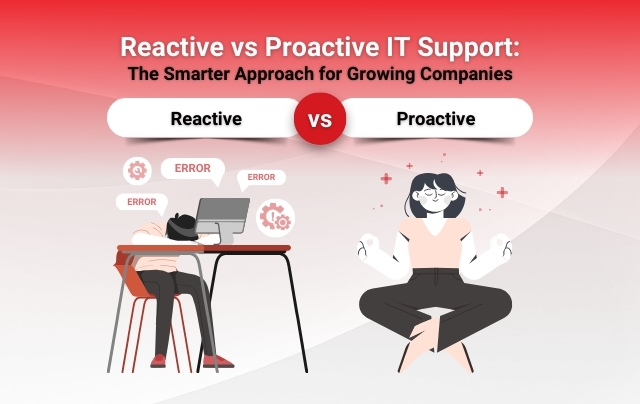
If you’re running a business in Ohio, this probably sounds familiar: an essential server goes down right before a major deadline. An employee’s computer grinds to a halt, again. You spend more time troubleshooting frustrating tech glitches than focusing on your customers. It often feels like you’re constantly putting out small IT fires, hoping a major blaze doesn’t erupt.
Many businesses are stuck in this reactive cycle without realizing there’s a better way. While this might seem cost-effective on the surface, the hidden costs are staggering. The reality is that every moment of downtime is a direct hit to your bottom line. For small to medium-sized businesses, the cost of IT downtime typically falls between $137 and $427 per minute.
Those minutes add up fast. This article will show you how shifting from a reactive to a proactive IT strategy can save you money, dramatically reduce your security risks, and free you to focus on what you do best: growing your business.
Key Takeaways
- Reactive IT Support focuses on fixing problems after they occur, leading to unpredictable costs and significant downtime.
- Proactive IT Support works to prevent issues before they start, offering budget stability, enhanced security, and improved productivity.
- The financial and security risks of staying with a reactive model are growing, especially for small and medium-sized businesses in Ohio.
- Transitioning to a proactive IT partner is a strategic move that aligns your technology with your long-term business goals.
Understanding the Two Models of IT Support
At its core, the difference between reactive and proactive IT support comes down to a simple question: Do you want to pay someone to fix problems, or invest in preventing them in the first place? Let’s break down what each model looks like in practice.
The Old Way: Reactive “Break-Fix” IT Support
The reactive model is straightforward: when something breaks, you call for IT support. A technician comes out, diagnoses the issue, fixes it, and sends you a bill for their time and materials. This is the traditional approach many businesses are accustomed to.
Think of your IT provider as a firefighter. They only show up when there’s a fire. Their job is to put out the flames and control the damage, but they don’t do anything to prevent the fire from starting again. This model has several fundamental drawbacks:
- Unpredictable Costs: You might have a low IT bill one month, followed by a shockingly high one the next when a major piece of equipment fails. This makes budgeting nearly impossible.
- Extended Downtime: The clock starts ticking the moment a problem occurs. You lose productive hours waiting for a technician to arrive, diagnose the issue, and implement a fix.
- Misaligned Incentives: In a break-fix model, the IT provider only makes money when your technology fails. There is no financial incentive for them to make your systems more stable or secure over the long term.
The New Standard: Proactive Managed IT Services
The proactive model, often called Managed IT Services, flips the script. Instead of paying to fix individual problems, you partner with an IT provider for a flat, predictable monthly fee. In return, they continuously monitor, manage, and maintain your entire IT environment to prevent issues from ever happening.
Think of this provider as your personal mechanic. They perform regular oil changes, tire rotations, and system check-ups to keep your car running smoothly and safely. Their goal is to identify and address small issues before they become catastrophic breakdowns on the side of the highway.
The philosophy is simple: maximize uptime, security, and efficiency. By aligning their success with yours, a proactive partner is incentivized to keep your systems running flawlessly. When your technology works, they succeed.
Reactive vs. Proactive IT: A Head-to-Head Comparison
Seeing the two models side-by-side makes the differences clear. While one focuses on damage control, the other is built on a foundation of stability and strategic planning.
| Feature | Reactive “Break-Fix” Support | Proactive Managed IT Support |
|---|---|---|
| Cost Structure | Unpredictable, hourly billing. You pay more when things break. | Predictable, flat-rate monthly fee. Your IT costs are a stable operational expense. |
| Business Disruption | High potential for downtime. Problems are addressed after they have already impacted your team and operations. | Focus on maximizing uptime. Potential issues are identified and resolved before they cause disruption. |
| Security | Addresses threats after a breach has occurred. Focus is on cleanup and recovery, not prevention. | Continuous, preventative security. Includes 24/7 monitoring, patch management, and threat prevention. |
| Strategic Focus | Short-term and transactional. The relationship is based on fixing the immediate problem with no long-term planning. | Long-term and strategic. Your partner helps align your technology with your business goals, advising on budgets and future needs. |
The impact of business disruption alone is a compelling reason to reconsider the reactive model. When systems are down, work stops. In fact, staff productivity are lost because of IT outages. A proactive approach is designed specifically to reclaim those hours.
Why a Proactive Partnership is the Smarter Choice for Ohio Businesses
Moving from a reactive to a proactive model is more than just a change in billing; it’s a strategic shift from fixing problems to preventing them. It’s about treating your technology as a critical asset that drives growth rather than an unpredictable expense that causes headaches.
For businesses in Ohio, this transition is most effective when guided by a local team that can act as a true partner, taking the full burden of IT management off your plate so you can focus on your core goals. This partnership approach is the new standard for IT support services in Ohio. A dedicated partner is the key to unlocking the full benefits of proactive management, ensuring your technology not only works but works for you.
The Core Business Benefits of Proactive IT Management
Predictable Budgeting and Reduced Long-Term Costs
One of the biggest pain points for any business owner is surprise expenses. A proactive model eliminates this. The flat monthly fee for managed services turns your IT costs into a predictable operational expense, just like rent or payroll.
More importantly, preventing major disasters is always cheaper than cleaning them up. The cost of an emergency server replacement, data recovery after a ransomware attack, or lost business from extended downtime will always exceed the investment in preventative maintenance. A proactive partner also provides strategic guidance on technology purchasing and lifecycle management, ensuring you don’t waste money on outdated or unsuitable equipment.
Dramatically Improved Cybersecurity and Risk Reduction
Many small business owners believe they are too small to be a target for cybercriminals. Unfortunately, the opposite is true. A proactive IT partner acts as your dedicated security team, implementing layers of protection to keep you safe. This includes:
- 24/7 network monitoring to detect suspicious activity.
- Consistent patch management to close known software vulnerabilities.
- Managed antivirus and anti-malware solutions.
- Employee security awareness training.
There is often a wide gap between worrying about a threat and being prepared for it. A proactive partner closes that gap, giving you expert defense and peace of mind.
Increased Employee Productivity and System Uptime
Slow computers, network bottlenecks, and buggy software aren’t just minor annoyances; they are productivity killers. Every minute an employee spends wrestling with technology is a minute they aren’t serving a customer, closing a sale, or completing a project.
Proactive maintenance keeps your systems optimized and running at peak performance, minimizing the daily frustrations that grind work to a halt. Uptime becomes the default state, allowing your team to focus on revenue-generating activities. Furthermore, a managed IT partner handles your disaster recovery and business continuity planning, creating a clear roadmap to keep your business operational even if a major event like a fire, flood, or cyberattack occurs.
Conclusion: Stop Fighting Fires and Start Building Your Future
Ultimately, the choice comes down to this: do you want to continue reacting to costly and disruptive IT problems, or do you want to proactively invest in the stability, security, and growth of your business?
The reactive break-fix model leaves you vulnerable to downtime, unpredictable costs, and ever-growing security threats. A proactive approach offers predictable budgeting, robust cybersecurity, and enhanced productivity, turning your technology from a liability into a strategic asset.
A modern IT partner doesn’t just fix what’s broken. They provide the peace of mind and strategic guidance you need to thrive. By taking the burden of technology off your shoulders, they empower you to focus on what you do best—running your business and building its future.