Introduction
Effective garden waste management is a key part of sustainable gardening and responsible living. As the seasons change, so do the types and volumes of organic waste produced in gardens. Managing this material correctly helps maintain a healthy outdoor space, improves soil quality, reduces landfill use, and supports long-term environmental sustainability. With the right approach, garden waste can become a valuable resource rather than a disposal problem.
Understanding Garden Green Waste
Garden green waste refers to biodegradable materials produced through routine gardening activities. Knowing what belongs in this category—and what does not—is essential for composting, council collections, and environmentally responsible disposal.
Acceptable Green Waste
Most councils and compost systems accept the following organic garden materials:
- Grass clippings
- Leaves and hedge trimmings
- Small branches and twigs
- Non-invasive weeds
- Dead flowers and soft plant material
- General plant debris
These materials break down naturally and can be reused to enrich soil or processed through approved green waste systems.
Excluded and Contaminated Items
Some garden-related materials should never be placed in green waste bins, as they can contaminate compost or cause environmental harm:
- Soil: Too heavy for processing machinery; best reused in garden beds
- Pet waste: Contains harmful pathogens; dispose of in general waste
- Invasive plants: Can spread and cause legal and ecological issues
- Food waste: Attracts pests unless processed in a dedicated system
- Plastics, rubble, and tools: Non-compostable and damaging to equipment
- Some teabags: Often contain plastic and require correct disposal
Correct separation at this stage ensures all further waste management efforts remain effective.
Core On-Site Recycling Techniques
Recycling garden waste on-site is one of the most sustainable ways to manage organic material. Composting, mulching, and leafmould production form the foundation of a closed-loop garden system.
Composting: Turning Waste into Nutrients
Composting transforms garden waste into nutrient-rich organic matter that improves soil structure and fertility.
Key composting guidelines:
- Avoid composting diseased plants to prevent spreading pathogens
- Do not add fallen fruit, which can harbor pests
- Include healthy plant trimmings, dead leaves, and soft garden waste
A balanced compost pile supports microbial activity and steadily produces valuable material for future growing seasons. For those seeking deeper knowledge, this Compost Ultimate Guide provides detailed instructions and best practices.
Mulching for Soil Protection
Mulching uses organic materials to protect soil and reduce water loss.
- Grass clippings: Ideal in warm months to retain moisture
- Leaves: Lightweight, easy to apply, and perfect for autumn
- Wood chips: Excellent winter insulation for plant roots
As mulch breaks down, it feeds the soil and suppresses weed growth naturally.
Leafmould: Low-Effort Soil Improvement
Leafmould is created by allowing collected leaves to decompose slowly. While the process takes time, the result is a highly effective soil conditioner.
Collected leaves can be stored in perforated bags or simple enclosures and left to decay naturally. Over time, they produce material suitable for mulching, soil improvement, or potting mixes, depending on maturity.
Seasonal Garden Waste Management Plan
Aligning waste strategies with seasonal garden activities improves efficiency and reduces unnecessary disposal.
Spring: Clearing and Preparation
Spring generates significant waste from clearing old growth and preparing for new planting.
- Remove dead plant material from winter
- Start fresh compost piles using organic debris
- Prepare soil using matured compost where available
This sets the foundation for the growing season ahead.
Summer: Ongoing Maintenance
Summer produces consistent green waste through regular maintenance.
- Grass clippings can be reused as mulch
- Healthy trimmings can be added continuously to compost
- Waste volumes increase steadily, requiring regular monitoring
This is a good time to assess whether home systems are keeping up with production.
Autumn: Leaves and Garden Reset
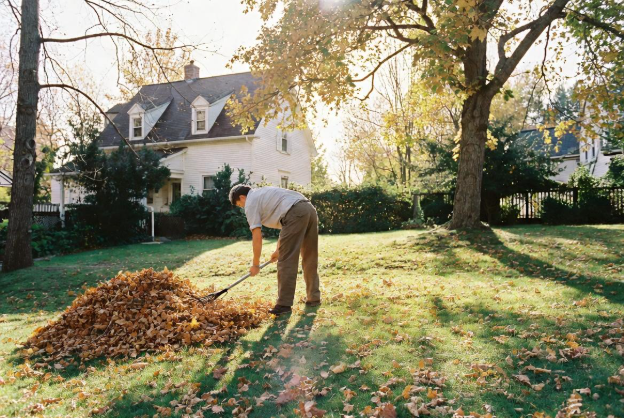
Autumn is often the most demanding season for garden waste management.
- Large volumes of fallen leaves
- Removal of spent plants
- General garden clean-up
Leaves can be separated for leafmould, while healthy plant material goes into compost. Diseased plants should always be removed completely. Excess material beyond on-site capacity may need to be set aside for external collection.
Winter: Protection and Planning
Waste generation slows in winter, shifting focus toward soil protection and planning.
- Apply compost and mulch to protect soil
- Perform tool maintenance to reduce waste long-term
- Group bulky seasonal waste such as leftover leaves or natural trees
Efficient handling during winter reduces workload in early spring.
When On-Site Management Isn’t Enough
Even with well-managed composting and mulching systems, some situations require additional help.
Common scenarios include:
- Sudden increases after storms or major pruning
- Large seasonal clean-ups
- Limited space or time for processing waste
- Bulky or mixed materials unsuitable for composting
When green waste exceeds manageable levels, using a Green Waste Removal option can ensure responsible handling without disrupting sustainable practices.
External Disposal Options
Several methods exist for disposing of garden waste responsibly when on-site recycling is insufficient:
- Council collections: Suitable for routine waste within allowed limits
- Local recycling centres: Accept a range of garden materials
- Professional services: Ideal for large volumes, soil, rubble, or full garden clearances
Choosing the right option depends on the type and quantity of waste produced at different times of the year.
A Note on Burning Garden Waste
Burning is heavily regulated and environmentally harmful. Smoke can create health and safety risks, and councils may issue penalties. Composting and approved collection methods are safer and more sustainable alternatives.
For those living in urban areas, managing garden waste can be particularly challenging due to limited space and strict disposal regulations. In such cases, considering alternative solutions can be beneficial. One effective option is to explore dumpster rental services in Boston, which provide a convenient and efficient way to handle large volumes of organic waste. These services offer various container sizes to accommodate different needs, ensuring that your garden waste is collected and processed responsibly. By utilizing such services, you can contribute to a cleaner environment while maintaining the beauty and health of your garden throughout the year.
Environmental Benefits of Proper Green Waste Management
Responsible garden waste management delivers measurable environmental benefits:
- Reduced landfill use: Prevents methane emissions from decomposing organic matter
- Healthier soil: Organic recycling improves structure and water retention
- Carbon reduction: Composting and soil improvement store carbon naturally
- Sustainable ecosystems: Fewer synthetic inputs and healthier gardens
Treating green waste as a resource supports a more resilient environment and reduces long-term ecological impact.
Conclusion
Garden waste management is a year-round process that adapts to seasonal changes. By combining composting, mulching, and leaf recycling with external disposal when necessary, garden waste can be handled responsibly and sustainably. The result is a healthier garden, reduced environmental impact, and a practical system that works throughout the entire year.