Grammar is one of the most important parts of learning any language. It helps us communicate clearly and avoid confusion. Many people think grammar is difficult, but when broken down into small steps, it becomes much easier to understand. Even when reading different types of content—whether educational sites or entertainment platforms like Mason Slots —grammar plays a big role in helping us read smoothly and understand what we see. Learning good grammar, along with synonyms and antonyms, can make your writing stronger and your speech more confident.
Grammar is the structure of a language. It includes rules about how words are used in sentences. These rules tell us how to form correct sentences, how to use punctuation, and how to choose the right tense. For example, knowing when to use “is” instead of “are,” or where to place commas, helps the reader understand your message. When grammar is correct, writing becomes clearer and more professional.
One of the easiest ways to start improving grammar is to focus on sentence structure. A basic sentence usually has a subject (who or what the sentence is about) and a verb (the action). For example, “The cat sleeps” is a simple and correct sentence. As you learn more, you can add adjectives, adverbs, and different types of phrases to make your sentences more interesting.
Another big part of grammar is understanding tenses. Tenses tell us when an action happens: in the past, present, or future. For example:
- Past: She walked to school.
- Present: She walks to school.
- Future: She will walk to school.
Using the correct tense helps your listener or reader know exactly when something happened.
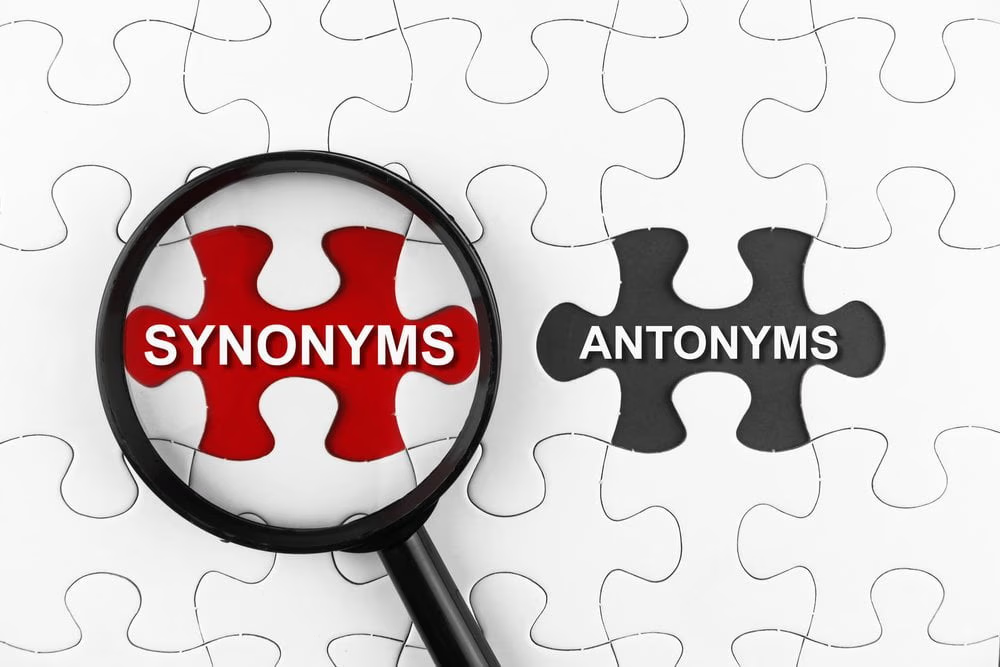
Along with grammar, learning synonyms and antonyms can make your vocabulary richer. Synonyms are words that have similar meanings. For example, happy has synonyms like joyful, glad, and cheerful. Using synonyms helps you avoid repeating the same word over and over again. It also makes your writing sound more interesting.
For instance, instead of saying:
“He is happy,”
you could say:
“He is joyful” or “He is cheerful.”
These small changes can make a big difference in how your writing feels.
On the other hand, antonyms are words with opposite meanings. For example, the antonym of happy is sad. Understanding antonyms helps you express contrast and describe differences more clearly.
Here are a few examples:
- Big — small
- Fast — slow
- Easy — hard
- Light — heavy
Synonyms and antonyms are very helpful when writing stories, essays, or even simple messages. They give you more options to express your thoughts. Instead of using the same simple words repeatedly, you can choose words that make your writing more colorful.
A good way to learn synonyms and antonyms is to read more. When you read books, articles, or even online posts, you see how different words are used in different contexts. You can also use a dictionary or a thesaurus to check meanings. Practice using new words in sentences so you can remember them better.
Another helpful method is to write a short paragraph each day and try to include at least two synonyms and two antonyms. This trains your mind to think of alternative words. Over time, your vocabulary will grow, and your writing will become much smoother.
Combining good grammar with a strong vocabulary makes communication easier. Whether you are speaking, writing, or sending an email, your message becomes more clear. People will understand you better, and you will feel more confident expressing your ideas.
In summary, grammar gives structure to your sentences, while synonyms and antonyms help you express yourself more creatively. Learning them does not have to be hard. With practice, reading, and a little patience, anyone can improve. As you build these skills, you will notice big improvements in how you speak and write every day.