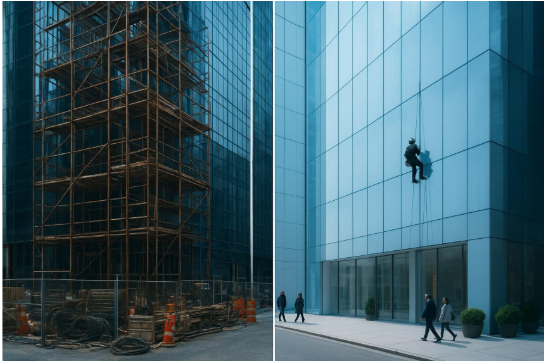
When you compare the main ways of working at height, rope access stands out as a much better choice than traditional scaffolding for cost, safety, and speed. Scaffolding has long been the usual solution for construction work, but rope access uses modern rigging and certified technicians to reach difficult areas in a fraction of the time and with far less hassle. By choosing rope access services, project managers can avoid bulky metal structures and keep maintenance and inspections running without stopping day-to-day activity or blocking entrances.
The main advantage is how simple and direct the work process becomes. Traditional scaffolding often needs weeks of planning, permits, and manual work just to build the platform before any actual job can start. Rope access systems are quick and flexible, letting technicians descend from the top of a structure and begin work within hours. This change from “bottom-up” to “top-down” access is a big reason rope access is now a modern standard for high-rise maintenance and industrial inspections.
What Is Rope Access and How Does It Differ from Traditional Scaffolding?
Rope access is a specialist method that grew out of climbing and caving. Trained workers use a two-rope system-a main working line and a backup safety line-to place themselves safely at height. Scaffolding relies on a temporary frame of metal or wood built from the ground up. Rope access technicians instead hang in harnesses using specific equipment, which lets them move up, down, and sideways across a building’s surface with a level of control a fixed platform cannot match.
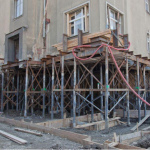
The difference in space and visual impact is striking. Scaffolding is heavy and highly visible, often covering a building’s exterior and nearby area for months. Rope access is almost invisible to passers-by. The equipment is light and can be packed away at the end of each shift, so the building’s look and access points stay clear. Scaffolding works well when many trades need a stable platform for long-term masonry or heavy work, but rope access is more like a precision tool, ideal for focused repairs and detailed inspections.
Major Differences Between Rope Access and Scaffolding
The biggest difference is how each method is supported. Scaffolding needs a solid ground base and many fixings into the building to stay stable. This makes it hard to use where ground space is tight, such as busy pavements in city centres or offshore platforms. Rope access technicians only need strong anchor points at the top of the structure, so they can work over water, above traffic, or inside narrow chimneys and stacks without any support at ground level.
Training and rules also differ in a big way. Rope access technicians go through strict training and certification with international bodies like IRATA (Industrial Rope Access Trade Association) or SPRAT. Their training focuses heavily on self-rescue and emergency actions. Scaffold safety relies more on the correct design and build of the structure. Because rope access technicians set up their own ropes and safety systems, their personal responsibility and level of skill are usually higher than that of a typical scaffold worker.
Benefits of Rope Access Over Traditional Scaffolding
Faster Setup and Demobilization
Time is a key factor on any industrial or commercial site. Scaffolding can take days or weeks to put up, especially on tall or complex buildings. This delay pushes back the start of the actual maintenance or repair work and stretches the whole project schedule. Rope access systems can often be installed and ready in minutes to a few hours. This quick setup is hugely helpful for emergency repairs or urgent inspections.
Taking the system down is just as quick. Once the job is complete, rope access technicians can remove their ropes and equipment and clear the area almost at once. This lets normal activity resume without a large metal structure staying in place. For hotels, shops, and other businesses that rely on clear views and easy access, this speed reduces the effect on customers and income.
Cost Savings on Labor and Materials
Cost reduction is one of the strongest reasons to choose rope access. Many projects using rope access save around 30% to 70% of their budget compared with those using scaffolding. Savings come from several areas: fewer workers are needed to set up, there are no high rental charges for large amounts of steel tubing, and many of the permits needed to block pavements or roads are no longer required.
Also, rope access technicians are often skilled in particular trades-such as NDT (Non-Destructive Testing), painting, or electrical work. You pay for one person who can both reach the work area and carry out the task. This reduces the need for several different contractors, cuts administration time, and keeps project costs down.
Increased Safety Standards
Hanging from ropes may look risky, but statistics show rope access is safer than scaffolding. The two-rope setup is a key reason: if the main line fails, the second line takes over at once. Every technician must pass strict tests and keep their qualifications up to date, so anyone working on ropes is trained to a high level in height safety.
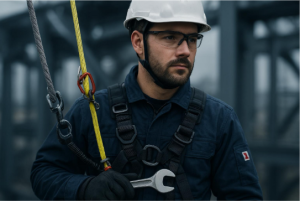
Safety also improves for people below. Rope access teams follow a “100% tethered tools” rule, so every tool, bucket, or camera is fixed to the worker or the rigging. This removes the risk of dropped tools, a common problem on scaffolding where items can fall through gaps. In busy city streets and public areas, this extra protection for the public is a major benefit.
Minimal Disruption to Work Environment
Scaffolding often creates “no-go” zones around a building. It can block doors, fill parking spaces, and cover windows, causing problems for staff and residents. Rope access causes almost no such disruption. Technicians work from above, keeping ground level clear for people and vehicles. This is especially helpful for hospitals, schools, and busy commercial buildings that need constant, safe access.
The low amount of equipment used in rope access also keeps noise levels down. There is no banging of steel poles or constant truck movements during setup. This quieter way of working lets offices, hotels, and other users carry on with their activities inside the building without feeling like they are in the middle of a noisy construction site.
Superior Access to Confined and Hard-to-Reach Areas
Modern buildings often have complex shapes-domes, overhangs, recesses, and narrow atriums-that are very hard to reach with rigid scaffolding. Rope access technicians can move through these shapes easily, using specific rigging methods to move sideways along surfaces or drop into tight spaces such as tanks or ducts. Their ability to place themselves exactly where needed leads to better inspections and higher-quality repairs.
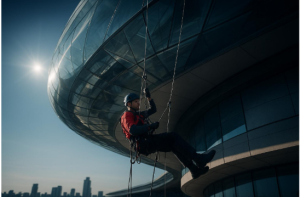
Industrial sites, such as power plants and refineries, usually have equipment packed closely together, leaving no room for scaffold bases. In these cases, rope access may be the only realistic option, letting technicians move through pipework and steel supports to reach the exact point they must inspect or repair. This flexibility means no part of a structure is ignored just because it is “too hard to reach.”
Versatility Across Different Industries and Projects
Rope access is used for far more than window cleaning. It plays an important role in many sectors, including aerospace, oil and gas, and renewable energy. Tasks include checking wind turbine blades, repairing offshore platforms, installing large signs on stadiums, and much more. Rope access can adjust to each location and job type, making it a common choice for companies that look after many different assets.
Because the gear is compact and easy to move, rope access works well in remote places where bringing in heavy scaffolding would be unrealistic or too costly. This makes it ideal for structures like bridges, dams, and cliffs, where the work area may be hundreds of feet above water or ground.
Reduced Environmental Impact
With many organisations focusing on sustainability, rope access offers a much greener option than scaffolding. Producing and transporting scaffolding-steel, aluminium, and timber-uses a lot of energy and creates a large carbon footprint. Rope access uses very little material and needs far fewer vehicle trips, which cuts fuel use and emissions.
Rope access also creates far less waste. There are no damaged boards or bent fittings to dispose of at the end of the project. By picking a lower-impact access method, companies can bring their maintenance work into line with their environmental, social, and governance (ESG) aims and show that working at height does not have to harm the environment.
Comparing Safety Records: Rope Access vs. Traditional Scaffolding
What Makes Rope Access Safer in Practice?
Safety is built into the way rope access operates. Technicians from companies like https://www.ropeaccessinlondon.co.uk/ work in pairs or teams with constant checks on each other. Beyond the two-rope setup, they are trained to assess risk on every job. They inspect anchor points and look for possible dangers before any rope is put in place. This early focus on risk often picks up problems before they cause harm and creates a strong safety culture.
Emergency response is usually faster with rope access. Because workers are already in harnesses and on ropes, they can carry out a rescue in mid-air far more quickly than someone trying to reach a casualty through a maze of scaffolding. Quick rescue is a key part of IRATA and SPRAT guidelines, helping make sure that, if a medical emergency does occur, the person involved can be brought to a safe place as quickly as possible.
Common Risks Associated with Scaffolding
Scaffolding, while helpful in many jobs, carries risks that are hard to remove. Falling objects are one of the main dangers; tools and materials can drop from height and seriously injure people below. The scaffold itself can also be a problem if it is not built and checked correctly. High winds, weak ground, or overloading can all cause a collapse, with severe results for workers and the public.
Another risk that people sometimes forget is building security. Scaffolding can act like a ready-made ladder, giving intruders easier access to windows and roofs after hours. Rope access does not leave any such structure in place. All ropes and equipment are removed at the end of the shift, so there is no extra climbing route for thieves or vandals, and building security stays stronger during the project.
When Should You Choose Rope Access Over Scaffolding?
Project Types and Environments Best Suited for Rope Access
Rope access is the best fit for jobs where speed, low disruption, and precision are the key goals. Typical examples include routine facade checks, leak tracing, and window cleaning on tall buildings. It also works very well for short jobs that only last a few days. In these cases, the time and money needed to put up scaffolding would be far greater than the effort needed for the actual repair, so rope access becomes the clear choice.
Sites with difficult surroundings also tend to suit rope access. Bridge work over rivers, maintenance above busy roads, and projects in live industrial plants where ground space is limited are all good examples. For heavy brickwork, long-term projects that need large amounts of materials stored at height, or situations where many different trades must work side by side on one surface, traditional scaffolding can still be the better option. A specialist access provider can help a client decide whether rope access, scaffolding, or a mix of both is the right approach for each location.
Industry Examples: Real-World Applications of Rope Access
Building Maintenance and High-Rise Cleaning
In large cities, rope access is central to keeping tall buildings in good condition. Technicians often descend tower blocks to repair glazing, carry out pressure washing, and clean windows. Because they can move freely across the facade, they can reach every part of the surface and achieve a level of finish that many automated systems or fixed platforms cannot match. This keeps skylines clean and smart while also protecting the building’s weatherproof layer.
Industrial Inspections and Repairs
Industrial facilities use rope access to inspect big structures like cooling towers, chimneys, and storage tanks. Technicians can carry ultrasonic devices, cameras, and other tools to check for cracks, corrosion, or other faults without needing to stop production or build huge scaffolds. Finding problems early in this way can save companies very large sums by avoiding major failures and shutdowns.
Infrastructure Projects and Bridges
Bridges are difficult to access because of their height and the fact that they often cross water or busy roads. Rope access gives engineers a way to get close to cables, towers, bearings, and undersides without closing lanes or causing long delays to traffic. This helps keep people moving while still allowing careful checks and repairs that extend the life and safety of key infrastructure.
Key Reasons to Choose Rope Access for Your Next Project
Choosing rope access is about more than cutting costs; it means using a modern, flexible, and safety-focused method of managing buildings and structures. As designs become more complex and cities more crowded, the limits of traditional scaffolding become clearer. Rope access offers a practical way forward that respects building design, supports environmental goals, and protects workers and the public.
Looking ahead, rope access will keep growing in value as it links with new tools like drones for initial surveys and digital systems for reporting and planning. For project managers and building owners, moving to rope access shows a clear commitment to current best practice. By picking an access method that is flexible and effective, you can have your next project delivered with the accuracy, speed, and safety that experienced rope access teams provide.