Most people give little thought to where their valuables are kept until something goes wrong. A house fire, a burglary, a flooded home — these are not everyday occurrences, but when they do happen, the absence of a secure storage plan tends to surface quickly.
Private vaults exist to address exactly that gap. They sit outside the home, outside the banking system, and are purpose-built for one thing: keeping valuables safe.
Singapore, in particular, has developed a mature and well-regarded private vault industry. The country’s political stability, low crime rate, and strong rule of law have made it a trusted jurisdiction for secure storage, both for residents and for international investors looking to hold assets here.
What Is a Private Vault?
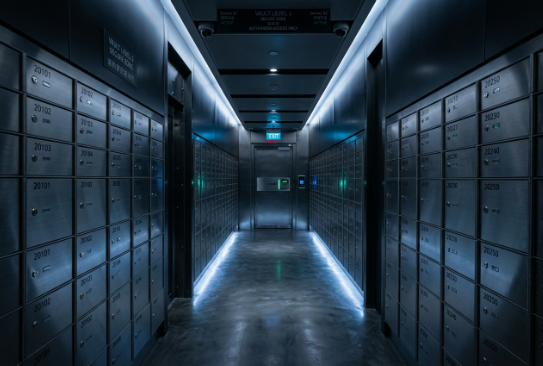
A private vault is a high-security, independent storage facility that rents out safe deposit boxes or private storage space to individuals and businesses. The operator maintains the physical infrastructure: the vault, the security systems, the access controls. The contents remain entirely the client’s own.
Unlike a bank, a private vault operator has no visibility into what is stored. The relationship is straightforward: you rent the space, you control access, and the contents are known only to you.
This distinction matters more than it might seem. Banks are financial institutions with regulatory obligations that can, under certain circumstances, affect your access to a safe deposit box. A private vault operates differently. Access is governed by the rental agreement between you and the operator, not by the bank’s broader institutional policies.
What Can You Store in a Private Vault?
The range is broad. Common items include physical gold and silver, jewelry, watches, important documents such as wills, passports, property titles, and certificates, as well as collectibles, heirlooms, and items of personal significance.
For businesses, private vaults are also used to store physical contracts, data storage devices, and backup documentation.
What most private vaults will not accept are items prohibited by law, hazardous materials, or perishables. Within those parameters, the contents are entirely at your discretion, and the operator is not informed of what is inside.
How Private Vaults Differ from Bank Safe Deposit Boxes
Banks have offered safe deposit boxes for decades, and they remain a serviceable option for many people. However, there are practical differences worth understanding.
Access at most banks is tied to banking hours. If you need to retrieve something on a Sunday evening or during a public holiday, that is generally not possible. Several local banks also restrict safe deposit box access to customers with qualifying accounts, such as priority or premier banking relationships.
There is also the question of what happens in exceptional circumstances. During the 2015 eurozone crisis, some European banks restricted access to safe deposit boxes when branches were temporarily closed. While Singapore’s banking environment is considerably more stable, it illustrates that access to items stored within a bank is not entirely independent of the bank’s own situation.
Private vaults address these concerns to varying degrees depending on the provider. Some operate 24 hours a day, year-round. Some require no bank account to register. And because they sit outside the banking system entirely, the contents are not exposed to institutional risks in the same way.
What to Look for in a Private Vault in Singapore
Not all providers are equal. These are the key factors worth evaluating before committing to one.
Access hours. If flexibility matters to you, confirm whether the facility operates outside standard business hours. Some private vaults in Singapore offer 24/7 access, while others do not.
Access control and privacy. Find out whether staff are present when you access your box. Automated facilities deliver the box to a private room with no staff involvement, which offers a meaningfully different level of privacy compared to manually accompanied access.
Security infrastructure. Look beyond the brochure. Ask specifically about the type of fire suppression system in place. Gas suppression systems protect contents without causing water damage, which is an important distinction. Also confirm surveillance coverage, alarm systems, and how access to account settings is controlled.
Independence from the banking system. If one of your reasons for using a private vault is to hold assets outside financial institutions, verify that the provider has no bank affiliation and that registration does not require an existing bank account.
Contract flexibility. Annual contracts are standard across the industry, but some providers offer monthly arrangements. This is useful if your storage needs are likely to change, or if you want to try the service before committing longer term.
Why Singapore Makes Sense as a Storage Jurisdiction
The choice of where to store valuables is not just about the facility. The country matters too.
Singapore consistently ranks among the world’s most politically stable and least corrupt jurisdictions. Its legal system offers strong protections for private property, and its position as a regional financial hub means it has developed sophisticated infrastructure for secure storage. For international investors or expats, it also serves as a convenient base, well-connected by air and operating in a time zone that bridges East and West.
These factors have contributed to Singapore’s growing reputation as a preferred location for private vault storage across Asia.
STARVAULT: A Private Vault Built Around the Client
For those looking for a private vault in Singapore that combines strong security with genuine flexibility, STARVAULT is worth considering.
The facility operates on a fully automated basis. A robotic system retrieves your safe deposit box and brings it to a private room. No staff accompaniment, no shared access, no one else involved. A five-step authentication process covers facial recognition, card access, fingerprint verification, PIN code, and a physical key. Any changes to account access require an OTP from the account holder, which means staff cannot modify your access protocols without your direct authorization.
Access is available 24 hours a day, every day of the year, including public holidays. The vault is housed in a steel-reinforced concrete structure with professional gas suppression fire protection, positioned 29 meters above water level to reduce flood risk. Registration does not require a local bank account, making it accessible to foreigners and non-residents as well.
Contracts start from one month, which is among the more flexible arrangements available in the Singapore market.
Whether you are storing physical gold, important documents, or personal valuables, a private vault offers a level of security and control that home storage and bank safe deposit boxes often cannot match. In Singapore, the options are well-developed. The key is knowing what to look for.