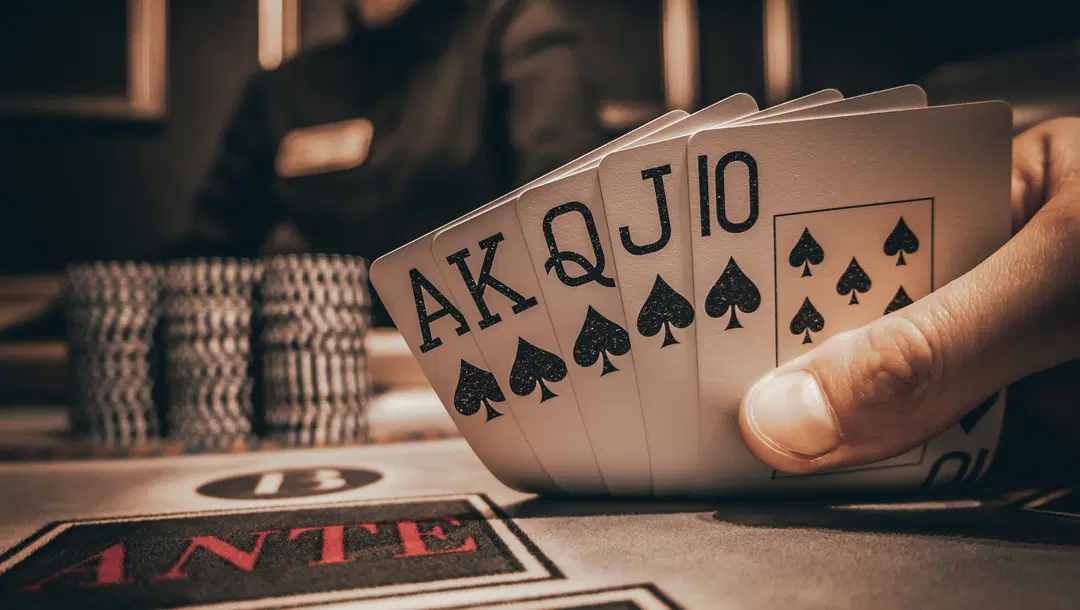
Walking into a poker room without knowing basic terminology guarantees confusion and costly mistakes. Players who sit down at tables without grasping fundamental vocabulary lose money faster than those who understand what dealers and opponents communicate. This vocabulary forms the foundation of every decision you make at the felt.
The Money Moving Around
Pot refers to all chips wagered during a hand. Players compete for this accumulated money by betting, raising, or folding throughout each round. Blinds are mandatory bets posted before cards are dealt. The small blind sits immediately left of the dealer button and posts half the minimum bet, while the big blind posts the full amount.
Ante functions differently from blinds. Every player at the table contributes this forced bet before receiving cards, creating immediate action and preventing excessive folding. Buy-in represents the minimum amount required to join a game. Cash games allow multiple rebuys, while tournaments typically restrict entry to a single buy-in unless specified as a rebuy event.
Actions You Take
Call means matching the current bet to continue in the hand. Raise increases the betting amount beyond the current wager, forcing opponents to commit more chips or fold. Check passes the action to the next player without betting when no money has been wagered in that round.
Fold surrenders your cards and forfeits any chance of winning the pot. All-in commits your entire chip stack to the pot. Once you push forward all remaining chips, you cannot be forced out of the hand regardless of subsequent betting.
Reading Physical Tells at Live Tables
Players often focus exclusively on memorizing hand rankings and pot odds while overlooking the behavioral patterns that reveal opponent strength. A player who suddenly sits upright after checking their hole cards typically holds premium hands, while someone who covers their mouth after betting often bluffs. These observations matter in real money poker sessions at casinos, home games, and tournament settings where physical presence allows for pattern recognition.
Timing tells prove equally valuable. A player who instantly calls large bets usually holds drawing hands, while those who tank for extended periods before raising often hold the nuts. Professional players track breathing patterns, chip handling habits, and posture changes to gain information beyond mathematical calculations. The same player who confidently announces raises with strong holdings might fumble chips when bluffing.
Card Combinations and Rankings
Hole cards are the private cards dealt face-down to each player. In Texas Hold’em, you receive 2 hole cards that combine with community cards to form your best 5-card hand. Community cards appear face-up in the center and belong to all active players.
The flop reveals the first 3 community cards simultaneously. The turn adds a fourth community card, also called fourth street. The river completes the board with a fifth and final community card. Your hand consists of the best 5-card combination using any mix of hole cards and community cards.
Position Names Around the Table
Button marks the dealer position and rotates clockwise after each hand. This seat acts last post-flop, providing maximum information before decisions. Under the gun (UTG) sits immediately left of the big blind and acts first pre-flop, facing the disadvantage of minimal information.
Cutoff occupies the seat right of the button, acting second-to-last post-flop. Hijack sits right of the cutoff. These late positions allow aggressive play since fewer players act behind them.
Mathematical Concepts
Pot odds compare the current pot size to the cost of calling. If the pot contains $100 and your opponent bets $20, you face 6-to-1 pot odds. Implied odds estimate future earnings if you complete your draw. Expected value calculates the average profit or loss of a decision over time.
Equity represents your percentage chance of winning at showdown. Pocket aces hold approximately 85% equity against a random hand pre-flop. Outs count cards that improve your hand to likely winners. A flush draw on the flop typically has 9 outs.
Tournament-Specific Vocabulary
ICM (Independent Chip Model) assigns dollar values to tournament chips based on payout structure and stack sizes. Bubble describes the elimination point before reaching paid positions. The player eliminated on the bubble finishes without prize money despite outlasting most of the field.
Rebuy allows purchasing additional chips after busting during a designated period. Add-on permits one-time chip purchases regardless of stack size, typically offered at the first break. Turbo tournaments feature faster blind increases, accelerating action and reducing play duration.
Betting Patterns and Strategies
Continuation bet (c-bet) occurs when the pre-flop aggressor bets the flop regardless of improvement. Three-bet refers to the first re-raise pre-flop, following the big blind (first bet) and initial raise (second bet). Four-bet represents the next escalation in this sequence.
Value bet extracts maximum profit from weaker hands willing to call. Bluff represents strength despite holding weak cards, attempting to force superior hands to fold. Semi-bluff combines fold equity with draw potential, betting aggressively while holding outs to improve.
Common Poker Situations
Heads-up describes action between two players only. Multi-way pot involves three or more players seeing the flop. Dry board contains few draws and connected cards, like K-7-2 rainbow. Wet board offers multiple draws and connections, such as 9-10-J with two hearts.
Cooler occurs when strong hands collide inevitably, like set-over-set situations. Bad beat happens when a statistical favorite loses to an unlikely draw. These situations test emotional control but represent normal variance in poker.
Understanding these 50 terms transforms casino visits from confusing ordeals into profitable sessions. Professional dealers expect players to know this vocabulary, and opponents exploit those who demonstrate ignorance through incorrect terminology or delayed reactions to standard situations. Master these concepts before sitting at any poker table to avoid unnecessary losses from basic misunderstandings.