Do you know what could lurk in the seams of motel furniture, even when a room looks spotless? Bed bugs easily hide in mattresses, chairs, and wooden fixtures, causing sleepless nights for guests and costly problems for owners. Since infestations spread fast, learning how to get rid of bed bugs correctly is key to keeping your motel safe and welcoming. Read on to learn how to handle and prevent this growing issue.
While discovering bed bugs often means it’s time for deep cleaning or replacement of infested items, it also serves as a stark reminder to consider the age and condition of your mattress, as most have a finite lifetime of a good mattress (typically 7-10 years) and an older, degraded one can be more susceptible to harboring such pests
Why Bed Bugs Hide in Motel Furniture
Motel furniture offers the perfect environment for bed bugs, making infestations a frequent issue. The following explains why these pests choose such spaces and why motels face higher risks.
- Seek warm, cushioned spaces: Beds, couches, and chairs provide the warmth and padding bed bugs need.
- Use hidden crevices for protection: They hide in seams, cracks, and folds where they’re difficult to detect.
- Stay close to human activity: Furniture near sleeping areas gives them easy access to hosts.
Additionally, motel operations create conditions that spread infestations. The following are the main factors:
- Frequent guest turnover: High occupancy gives bed bugs more chances to move between rooms.
- Luggage transfer as a carrier: They hitchhike in suitcases, bags, and clothing.
- Shared common areas: Sofas and chairs in lobbies can also serve as transfer points.
By recognizing these risks, motel owners can take proactive steps to reduce infestations effectively.
Common Signs of Bed Bugs in Motel Furniture
Detecting bed bugs in motel furniture early is essential to prevent larger infestations. Watch out for the following signs:
- Blood Stains: Watch for small reddish spots on mattresses, chairs, or upholstered surfaces. Bed bugs often leave these spots when someone crushes them.
- Dark Droppings: Look for tiny black or brown specks along seams, cushion edges, or wooden joints, which signal dried bed bug feces.
- Shed Skins: Inspect cushions, headboards, and furniture frames for translucent shells that bed bugs leave behind as they grow.
- Musty Odors: Notice a sweet, mold‑like smell in areas with heavier activity, since it often indicates a growing infestation.
Since infestations spread quickly, knowing how to get rid of bed bugs prevents costly treatments. Regular furniture checks help you act early and protect your home.
How to Get Rid of Bed Bugs in Mattresses and Upholstered Beds
Dealing with bed bugs in mattresses and upholstered beds requires a careful, step‑by‑step approach. The following steps outline how to get rid of bed bugs effectively:
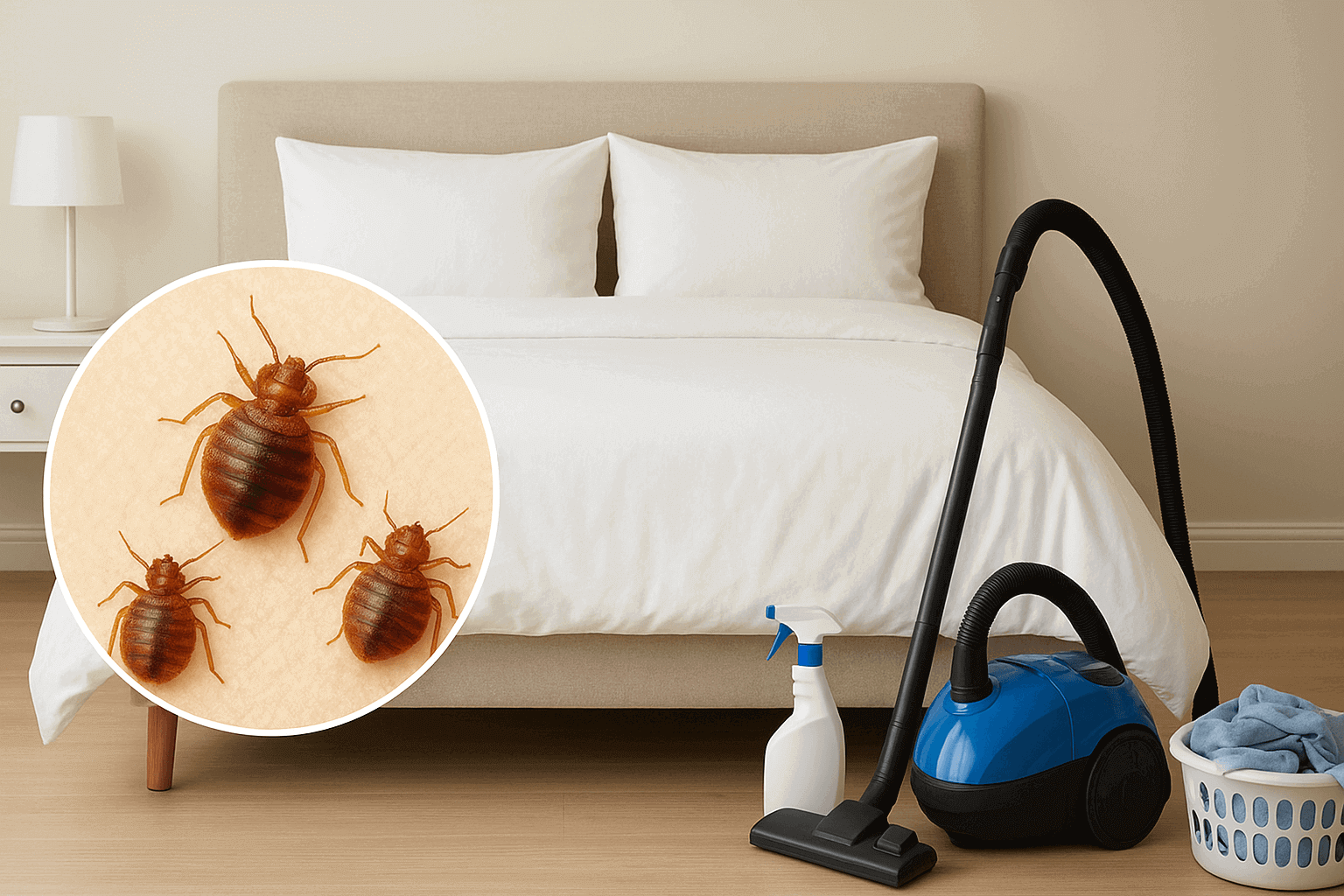
- Vacuum seams and crevices: Use a crevice tool on mattress seams, folds, and edges. Seal and discard the vacuum contents outside immediately.
- Apply steam treatment: Use a steamer at 120°F, moving along tufts, buttons, and edges. Let areas dry thoroughly before replacing bedding.
- Install protective encasements: Cover mattresses and box springs with zippered encasements to trap bugs and block new infestations.
- Clean upholstered furniture: Vacuum cushions, armrests, and seams. Steam cracks and folds, wash covers in hot water, and dry on high heat.
- Conduct routine inspections: Check mattresses, frames, and nearby furniture for dark spots or shed skins. Inspect weekly after treatment, then monthly.
Following these steps helps keep infestations under control. With consistency, you can stop minor problems before they grow.
Preventive Strategies: How to Get Rid of Bed Bugs Before They Spread
Preventing infestations early is usually easier than managing a full outbreak. The following strategies help prevent bed bugs from taking hold in furniture and sleeping areas.
- Seal cracks in wooden furniture: Apply caulk or sealant to joints, seams, and small openings where bed bugs can hide. It reduces their ability to settle in hard‑to‑reach spots.
- Check headboards and nightstands: During routine cleaning rounds, carefully inspect these areas, as bed bugs often use them as nearby hiding places.
- Use bed bug interceptors: Place interceptors under the bed and furniture legs to trap bed bugs before they reach sleeping or sitting areas.
- Install furniture covers: Encase mattresses, box springs, and upholstered items in protective covers to eliminate hiding places and facilitate inspections.
By combining these steps, property owners can reduce the likelihood of infestations. Early and consistent use of preventive methods ensures fewer risks and faster responses when applying strategies on how to get rid of bed bugs.
Stop Bed Bugs for Good!
Staying ahead of bed bugs in motel furniture takes vigilance, routine checks, and proven treatments. By combining preventive measures with targeted solutions, you can stop infestations before they damage your business. So don’t wait until a small problem becomes costly—take notes on how to get rid of bed bugs in hotels and motels, and reach out to a trusted pest control service today to protect your guests and reputation.