
While the usage of SMFH is more extreme, it’s effective in conveying strong reactions, often in situations where the person is bewildered or upset about something they have seen, read, or experienced. Like many digital acronyms, SMFH helps users express complex emotions succinctly in a world that values quick and efficient communication.
What Does SMFH Mean in Text?

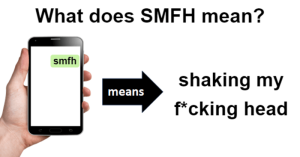
SMFH stands for “Shaking My F*ing Head**” and is used to convey intense disbelief or frustration in reaction to something ridiculous, irritating, or just plainly absurd. It’s a more forceful variation of the widely known SMH (Shaking My Head), adding emphasis with the explicit language.
In text communication, SMFH is often used to express a combination of frustration and astonishment, particularly when faced with something that seems utterly nonsensical or upsetting. It’s typically employed when words alone cannot fully capture the level of shock or annoyance felt.
Example:
- “He said he forgot the plan again… SMFH”
- “Did you see that meme? SMFH, some people have no shame.”
Common Uses of SMFH in Texting and Messaging
In texting and online messaging, SMFH is often used in response to situations that leave the person feeling both stunned and frustrated. Here are a few common scenarios where SMFH is used:
- Frustrating Situations:
When something doesn’t go as planned or causes frustration, SMFH provides a succinct way to express that feeling.
- Example: “I can’t believe I missed the train again. SMFH.”
- Absurd or Ridiculous Statements:
SMFH is perfect for reacting to something that seems outlandish or unbelievable.
- Example: “She really thinks that’s going to work? SMFH.”
- Annoying or Repetitive Behavior:
When dealing with someone’s persistent irritating actions, SMFH is a way to show you’re fed up.
- Example: “He’s late for the third time this week. SMFH.”
- Surprising Situations:
SMFH can be used in scenarios where the situation is so absurd that all you can do is shake your head in disbelief.
- Example: “They actually canceled the concert last minute. SMFH.”
The History and Evolution of SMFH in Online Language
SMFH evolved as an extension of the much simpler SMH, which has been part of internet culture for over a decade. The use of abbreviations like SMH helped to streamline communication and express emotions quickly, especially in the fast-paced environment of online messaging.
The addition of the “F” in SMFH provides a way to elevate the emotion, signifying a higher level of frustration or disbelief. It reflects the growing trend of emphasizing emotions in digital communication, as people seek ways to convey their feelings in a world where brevity is key.
Initially, acronyms like SMH were used primarily in text messages, but as social media platforms like Twitter, Facebook, and Instagram gained popularity, abbreviations like SMFH spread more widely. It allowed users to succinctly express strong reactions, whether they were commenting on a post, tweeting about something outrageous, or even just texting friends.
How SMFH is Used in Different Contexts
While SMFH is typically used to express frustration or disbelief, its meaning can slightly change depending on the context in which it is used. Here are different scenarios where SMFH may appear:
- Casual Conversations with Friends:
SMFH is commonly used in informal exchanges to communicate shock or frustration with everyday situations.
- Example: “He’s always making the same mistake. SMFH.”
- Social Media Posts or Comments:
On platforms like Twitter or Instagram, SMFH can be used to react to something ridiculous or shocking.
- Example: “This person actually believes that conspiracy theory… SMFH.”
- Reactions to News Events or Online Content:
People often use SMFH to express disapproval or disbelief at news events, viral content, or online trends.
- Example: “Another celebrity scandal? SMFH.”
- Within Group Chats:
SMFH can be used in group messages to express a shared frustration or disbelief, adding emphasis to a collective feeling.
- Example: “Why did he not follow through on his promise? SMFH.”
SMFH vs. Other Abbreviations (e.g., SMH, LOL)
SMFH and other similar abbreviations like SMH and LOL differ in their intensity and the emotions they convey.
- SMH (Shaking My Head):
A more mild expression of disbelief or disappointment. It conveys mild frustration without the strong emotional emphasis that SMFH carries.- Example: “That’s a terrible idea, SMH.”
- SMFH (Shaking My F*ing Head):**
A more intense and exaggerated version of SMH, used to indicate a higher level of disbelief, frustration, or annoyance.- Example: “How could he not know that? SMFH.”
- LOL (Laugh Out Loud):
Used to express humor, amusement, or something funny. It contrasts with SMFH, which indicates frustration.- Example: “That meme is hilarious, LOL.”
SMFH, therefore, serves as a more emotionally charged alternative to SMH, offering users a stronger way to express their reactions.
When to Use SMFH in Text Conversations
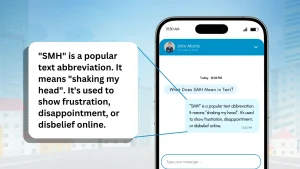
SMFH is best used when you need to convey intense frustration, disbelief, or astonishment over a situation or statement. It’s appropriate for both casual and informal conversations, but can also be used in social media contexts to share your reaction to something outrageous. Here’s when you should consider using SMFH:
- When Something is Completely Ridiculous:
If a situation is so absurd that it leaves you speechless, SMFH helps to underscore your surprise and frustration. - Repeated Mistakes:
When someone repeatedly makes the same mistake or behaves in a way that frustrates you, SMFH is a way to express how fed up you are. - In Reaction to Unbelievable Situations:
When faced with something that just doesn’t make sense, SMFH allows you to react in a way that shows your disbelief.
The Emotional Tone Behind SMFH in Texts
The emotional tone behind SMFH in texts is one of intense frustration, disbelief, or exasperation. It’s often used when the sender is reacting to something that is either absurd, ridiculous, or infuriating. While SMH (“Shaking My Head”) can convey a more mild sense of disappointment or disbelief, SMFH takes the emotion up a notch, adding a sense of anger or over-the-top astonishment.
This heightened emotional expression allows the user to quickly convey their irritation or shock in a more forceful way. The explicit language in SMFH also intensifies the reaction, signaling a more serious level of annoyance. It’s the perfect response when words alone might not capture the full extent of frustration or surprise someone is feeling.
Examples of the emotional tones include:
- Frustration: “I told him to bring the food 3 hours ago, SMFH.”
- Disbelief: “She actually did that? SMFH.”
- Exasperation: “Not again… SMFH.”
Examples of SMFH in Text Conversations
Using SMFH in text conversations can help emphasize the level of disbelief, anger, or frustration a person is feeling. Here are a few examples of how SMFH might appear in different contexts:
- Reacting to someone’s mistake:
- “He said he was going to help me, but he never showed up… SMFH.”
- Frustration with repeated behavior:
- “How does he keep forgetting everything? SMFH.”
- Exasperation over a situation:
- “Another bad decision? SMFH. This is getting out of hand.”
- Unbelievable actions from others:
- “She actually spent all her money on that? SMFH.”
- Reaction to shocking news or events:
- “Did they really just cancel the event? SMFH.”
Each of these examples showcases the use of SMFH to reflect the sender’s strong emotional response to various scenarios, from annoyance to astonishment.
SMFH in Social Media vs. Texting
The way SMFH is used in social media versus texting can differ due to the tone, context, and audience.
- In Social Media:
On platforms like Twitter, Instagram, or Facebook, SMFH is often used to respond to public events, viral content, or news that’s outrageous or frustrating. It’s a quick way to show shared exasperation, and the tone can be more humorous or sarcastic depending on the post.- Example: “They really did this on TV? SMFH.”
- In Texting:
In private conversations, SMFH tends to be used more personally, reflecting the frustration or disbelief that one feels about a direct interaction or situation. It’s typically more intense and raw in texts, especially if you’re venting to friends or loved ones.- Example: “Can you believe he bailed on me again? SMFH.”
The audience in text conversations is usually smaller and more intimate, allowing for more genuine expressions of frustration compared to the broader, more playful use on social media.
Frequently Asked Questions About SMFH Meaning in Text
- What does SMFH stand for in text?
- SMFH stands for “Shaking My F*ing Head**,” used to express strong disbelief, frustration, or annoyance.
- How is SMFH different from SMH?
- SMFH is a more intense and emotional version of SMH, often used when someone wants to express heightened frustration or astonishment.
- Can SMFH be used in professional settings?
- No, SMFH is best used in informal or casual conversations, especially with friends, as it includes explicit language.
- Is SMFH appropriate for social media?
- Yes, SMFH is commonly used on social media to react to posts or content that are absurd, frustrating, or ridiculous.
- When should I use SMFH in a conversation?
- SMFH should be used when you’re feeling intense frustration, disbelief, or shock over something that seems ridiculous or irritating.
- Is SMFH offensive?
- Yes, SMFH contains explicit language, so it’s considered informal and potentially offensive depending on the context and the audience.
- Can I use SMFH for humorous situations?
- While it’s often used to express frustration, SMFH can also be used in a sarcastic or humorous context, depending on the situation.
Conclusion of SMFH Meaning in Text
SMFH is a highly expressive and emotional acronym used to convey disbelief, frustration, or shock in text conversations. It’s a more intense form of SMH and is particularly useful when words alone cannot capture the extent of one’s feelings.
While it’s most commonly used in informal settings, its use on social media has made it a powerful tool for reacting to outrageous or frustrating situations. Understanding when and how to use SMFH allows individuals to express their emotions concisely and effectively, ensuring that their frustration or disbelief is clearly understood by their audience.