IDT Meaning in Text stands for an abbreviation of “I Don’t Think”.In today’s fast-paced digital world, texting and online messaging have transformed the way people communicate. Shortened phrases and slang terms, such as “IDT,” have become integral to casual conversations. “IDT” is an abbreviation for “I Don’t Think”, and it serves as a quick way to express uncertainty, doubt, or a lack of belief in something. Whether you’re chatting with friends, family, or acquaintances, using “IDT” makes communication faster, often conveying a sense of casualness and ease. This acronym, like many others, allows users to save time while still effectively conveying their message.
In texting, “IDT” is widely used across various platforms, including social media, group chats, and direct messages. It is part of a growing trend of internet slang that is commonly used in informal conversations, but it is important to know when and where it is appropriate.
What Does “IDT” Stand for in Text Conversations?
In texting conversations, “IDT” stands for “I Don’t Think”. This abbreviation is often used when someone wants to express doubt or convey that they are unsure about something. For example, if someone asks if a certain event is happening, you might respond with “IDT so,” meaning you don’t believe it’s true or you’re not sure.
The use of “IDT” is quite common in casual conversations, and it has become an effective way to share uncertainty or express an opinion without needing to type a longer response. This abbreviation is particularly popular in texting, where speed and brevity are prioritized over lengthy explanations.
The Common Uses of “IDT” in Messaging
“I Don’t Think” or “IDT” is used primarily to express doubt, hesitation, or a lack of conviction in a statement. Here are some common uses of “IDT” in text messaging:
- Expressing Uncertainty: If you’re unsure about something, you might reply with “IDT” to show that you’re not fully convinced. For example, “Do you think they’ll make it to the party?” “IDT.”
- Giving an Opinion: Sometimes, “IDT” can be used when sharing a mild disagreement or opinion. “I don’t think that’s a good idea” can be shortened to “IDT that’s a good idea.”
- Conveying Doubt: If you’re skeptical about something, using “IDT” helps to convey doubt quickly. For instance, “Do you believe he’ll win?” “IDT.”
Overall, “IDT” helps to keep communication light and quick, allowing for quick expressions of doubt or uncertainty without adding too much text.
When and How to Use “IDT” in Texts
“IDT” is best used in informal conversations where speed and simplicity are prioritized. This abbreviation is perfect for texting with friends, family, or close colleagues when the tone of the conversation is casual. Here’s when and how to use “IDT” effectively:
- Use “IDT” when you’re unsure: If you’re asked to confirm something you’re unsure about, “IDT” can be a quick, polite way to express doubt. For example, “Is this the right address?” “IDT.”
- Avoid using “IDT” in formal settings: Since it’s informal, it should be reserved for texting rather than professional emails or serious discussions. For example, you wouldn’t say “IDT that’s possible” in a work-related email.
- Use it to keep things brief: When you want to give an answer quickly but still express some uncertainty or reservation, “IDT” is the ideal choice.
By using “IDT” in appropriate situations, you can maintain a casual, efficient, and friendly tone in your texts.
“IDT” vs. Other Texting Abbreviations: What’s the Difference?
While “IDT” stands for “I Don’t Think,” there are many other texting abbreviations used to express doubt or uncertainty. Here’s how “IDT” compares to other similar abbreviations:
| Abbreviation | Meaning | Context |
| IDK | I Don’t Know | Used when you don’t have knowledge or information about something. |
| IMO | In My Opinion | Used to express personal thoughts, often in a less uncertain way. |
| SMH | Shaking My Head | Expresses disbelief or frustration, typically in response to something surprising or upsetting. |
| IDT | I Don’t Think | Used to express doubt or uncertainty about a situation or idea. |
Each abbreviation serves a different purpose, but “IDT” specifically emphasizes doubt or uncertainty, unlike “IMO,” which is often more opinion-based.
Is “IDT” Formal or Informal in Texting?
“IDT” is informal and is not suitable for professional or formal communication. It is typically used in text messages, social media posts, or casual conversations where brevity and informality are expected. Using “IDT” in emails or professional settings may come off as unprofessional or too casual. For instance, in a professional email, instead of writing “IDT that will be possible,” it would be more appropriate to say, “I do not believe that will be possible.”
The tone of “IDT” fits better in personal conversations, such as chatting with friends or family, or even in informal group chats. It’s an efficient way to express doubt without having to type a longer response, but it should be avoided in more serious or formal contexts.
What Does “IDT” Mean in Social Media Contexts?
On social media, “IDT” is used in the same way it’s used in texting: to express doubt, uncertainty, or to convey that the user doesn’t believe something to be true. Whether it’s a comment, direct message, or post, users frequently employ “IDT” to offer a quick response to something they are skeptical about.
For example, on platforms like Twitter or Instagram, someone might post a statement such as, “I’m sure they’re not getting back together,” and a response could be, “IDT so,” implying disagreement or skepticism. This abbreviation allows users to keep up with the fast-paced nature of social media while still conveying meaningful reactions.
The Origin of “IDT” and How It Became Popular
“I Don’t Think” or “IDT” likely gained traction from the broader trend of internet slang that encourages brevity and speed in communication. Similar to other abbreviations like “LOL” (laugh out loud) or “BRB” (be right back), “IDT” emerged as a practical solution to the time constraints and character limits found in text messaging and social media interactions.
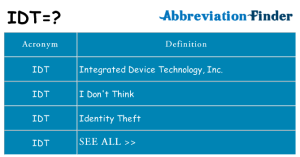
The use of abbreviations like “IDT” was popularized by young people, particularly in online forums, text messaging, and social media platforms. Its convenience and simplicity contributed to its widespread adoption across various internet communities. As social media became more integrated into daily life, so did the use of abbreviations like “IDT.”
Common Misunderstandings of “IDT” in Texting
While “IDT” is widely understood, it can sometimes be misinterpreted, especially if the recipient isn’t familiar with the abbreviation. Here are some common misunderstandings:
- Confusion with “IDK”: Some people might confuse “IDT” (I Don’t Think) with “IDK” (I Don’t Know). While both express uncertainty, “IDT” specifically indicates doubt about a situation, whereas “IDK” is used when the speaker doesn’t have knowledge about something.
- Tone Confusion: Depending on the context, “IDT” might be read as dismissive or unenthusiastic if not used appropriately. It’s important to ensure that the surrounding conversation matches the tone of “IDT” to avoid misunderstandings.
“IDT” in Professional vs. Casual Conversations
In casual conversations, “IDT” is widely accepted and commonly used. It’s an easy way to express doubt or disagreement in a friendly, informal manner. However, in professional settings, “IDT” should be avoided. Instead of using the abbreviation in an email or formal communication, it’s better to write out the full phrase: “I don’t think.”
Using “IDT” in professional communication may make the message sound too casual or even unprofessional, which could impact how your message is perceived. It’s important to adapt your language to the setting to maintain professionalism.
Different Variations or Meanings of “IDT”
While “IDT” generally means “I Don’t Think,” in some contexts, it can be used with slight variations in tone or emphasis. Sometimes people might add additional letters or characters, such as:
- “IDK” (I Don’t Know): Used when the speaker has no knowledge of something, unlike “IDT,” which expresses doubt.
- “IDT so”: A more casual variation meaning “I don’t think so,” commonly used to express disbelief or a negative response.
These variations allow users to adjust their tone and express more specific nuances in their uncertainty or doubt.
Frequently Asked Questions About “IDT”
What does “IDT” mean?
“IDT” stands for “I Don’t Think” and is used to express doubt or uncertainty in texting and online messaging.
How can I use “IDT” in a conversation?
You can use “IDT” to express that you don’t believe something is true, or you’re unsure about something. For example, “Do you think she’ll make it?” “IDT.”
Is “IDT” formal or informal?
“IDT” is informal and should be used in casual texting or social media conversations, not in professional communication.
Can “IDT” be used in social media?
Yes, “IDT” is commonly used in social media comments, messages, and posts to express doubt or uncertainty.
Can I use “IDT” in professional emails?
No, “IDT” is too informal for professional emails. Use the full phrase “I don’t think” instead.
What’s the difference between “IDT” and “IDK”?
“IDT” means “I Don’t Think,” which expresses doubt, while “IDK” means “I Don’t Know,” used when you’re unsure about something or lack information.
Is “IDT” the same as “I don’t believe”?
“I don’t believe” conveys a stronger sense of disbelief or certainty, while “IDT” is more casual and expresses doubt or uncertainty.
Conclusion: Why “IDT” is a Common Texting Acronym
In conclusion, “IDT” (I Don’t Think) has become a staple in modern digital communication. It allows users to quickly convey doubt or uncertainty in a casual and efficient way. Its widespread use across texting platforms, social media, and casual conversations shows how abbreviations like “IDT” continue to shape the way we communicate online.
Whether you’re texting friends or posting on social media, “IDT” is a simple, effective way to express your thoughts without typing out a lengthy response. As texting continues to evolve, so will the language we use to communicate with each other.